Abstract
Distinguishing between natural earthquakes and underground nuclear testing at regional epicentral distances is a complex geophysical problem. Currently, sophisticated statistical methods are being used to address it. In this study, we have investigated the utility of various machine learning based approaches in discriminating earthquakes from explosions, using 3-component seismograms recorded at regional distances from events located in the Western USA and in Eastern Asia. Our computational framework considers staple trace pre-processing techniques and a repertoire of discrimination pipelines consisting of feature transformations and discrimination (classification) models. Among the features we considered were spectrograms, cepstral coefficients, wavelet scattering transform coefficients, as well as novel geophysics-inspired feature sets, namely, slonograms – in essence, spectrograms adjusted for epicentral distances – which normalize P-to-S delay times and enhance discrimination accuracy. Furthermore, we conduct discrimination using Support Vector Machines, K-nearest Neighbor rules, Multi-layered Perceptrons (MLPs), and Long Short-Term Memory networks. Individual discrimination results obtained from stations observing a common event are reconciled and fused into a single network decision by simple thresholding of a weighted linear combination of discriminant values, whose weights depend on each vertical trace’s P wave signal-to-noise ratio. Preliminary results show that MLP-based discrimination using slonogram-based features achieve the best discrimination accuracy. Moreover, we demonstrate that our proposed network-based discrimination approach is appreciably robust vis-a-vis individual, station-specific discrimination.

Akshay Aravamudan
Doctor of Philosophy in Computer Engineering
My interests include machine learning, stochastic point processes, social-media diffusion and influence, hydrology applications, and edge AI.
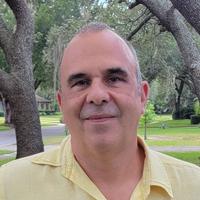
Georgios C. Anagnostopoulos
Associate Professor of Electrical Engineering & Computer Science
I lead the Machine Learning Research Group at FIT.

Xi Zhang
Doctor of Philosophy in Electrical Engineering
My research interests include point process analysis, modeling and optimization.

Erbene de Castro Maia Junior
M.S. Student of Computer Engineering
I am research assistant for the DeLAIEINE project.